

If you want to know how to earn respect as a coach, start by giving up the idea that you can demand it. Respect is earned. It isn’t just forced on a player. I have been coaching for 34 years, and I have watched what happens to a gym when a coach gets this backwards. The kids stop talking.
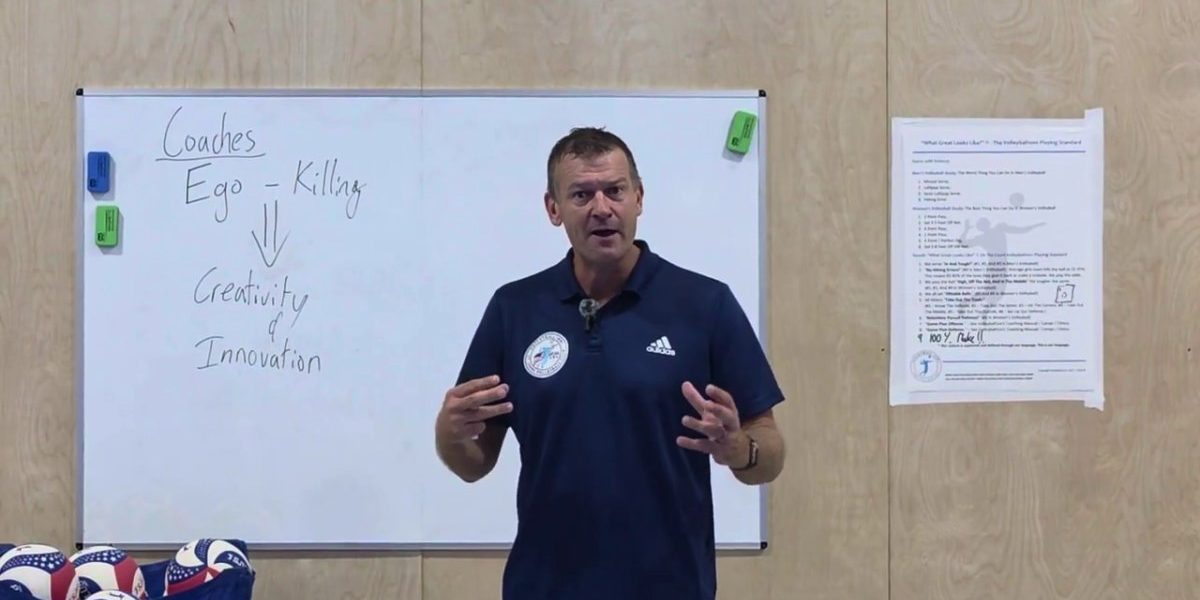
This video is a serious one, about how a coach’s ego can kill creativity and innovation in a team.
What forced respect costs you
I have seen a lot of coaches force respect. It gets driven into the kid. “You better call me sir.” “I want to be called ma’am.”
I understand what those coaches think they are building. Here is what I see them getting. “Now you’ve got a kid that’s 11, 12, 13 years old and they’re so afraid to talk to that coach that they don’t learn to collaborate. And then you don’t have collaboration, you don’t have creativity, you don’t have innovation.”
Picture one player. She doesn’t understand the rotation. She looks at the coach and decides it is safer to guess. She guesses wrong, and now the coach is correcting something he could have fixed with one question from her. Multiply that by twelve girls and a whole season. The coach gets a quiet, polite gym, and he gets nothing back from any of the people who are on the court.
It has been shocking and difficult for me to watch. A coach’s demand for respect isn’t really about the kids. That is why I call it ego.
What they call me
When players come into my gym, they call me coach. They also use my name. “Hey coach. Hey Andor.” I don’t correct them, because of what comes with it. “There’s a level of connection, because they know they can come to me and collaborate.”
That doesn’t mean there are no standards. My standards are high. I just don’t get them from a title. A kid who can walk up and talk to me will also take the correction when it comes, because she already knows I am on her side.
Who is smarter?
I asked a group of kids this at practice. “Who’s smarter, myself or all of you guys together?”
They answered right away. “Us together, of course.”
They are right. But knowing that does me no good if I don’t build a gym where they can use it. As I said in the video, “I don’t create an environment of collaboration if I’m a dictator and everyone’s calling me sir.”
Your players are on the court, and they can see things you can’t from the sideline. If they are too afraid to say it, you have thrown all of that away. And from what I have seen at higher levels of the game, they do the same thing I am describing. They talk.
“What do you want to work on today?”
The example I always come back to happened when I walked into a friend’s gym to film his practice. He is a well-known coach, and that week he was about to take his team to the national championship.
He walked over to his players and said, “Hey ladies, what do you want to work on today?”
I was stunned. “My gosh, this is the week of the national championship for this team, and this coach is going, what do you want to work on?”
Think about how much confidence that takes. It’s the week when a coach with an ego would grab the whiteboard and hold on tight. He asked his players first.
What earning it looks like
If you want to try this, you don’t need a speech. Here are some things you can do at your next practice:
- Ask a real question and wait for the answer. Try “What do you want to work on today?” and be ready to use what they tell you.
- Ask who is smarter. Let them say it. Then show them you meant it.
- Give them words for speaking up. We teach “I need help” and “I don’t understand” on day one, and I wrote about that talk in First Day of Volleyball Practice.
- Tell them the truth. I call it brutal honesty. Kids can tell when your praise is automatic, and they stop trusting it.
- Let go of the title. If “coach” and your first name are good enough, you have one less wall between you and your players.
The takeaway
You can make a kid say sir. You can’t make her tell you what she sees, ask you what she doesn’t understand or try something you never thought of. Those things show up only when she isn’t afraid of you, and a coach who gets those things from his team has the respect he wanted in the first place.
Coaches can see how we build this into a whole season in the Volleyball1on1 Coaching Manual. I am a two-time NCAA national champion at UCLA, and families near St. Augustine, Florida, can come see our gym at a club tryout.